

By Noah Bishop - Research Specialist
I'll never forget the nightmare of my first 3D printing experience in 2019. 😰 After spending hours assembling a complicated machine, my first print failed spectacularly—warped edges, spaghetti-like filament tangles, and a printer that sounded like a freight train at 2 AM. My excitement turned into frustration as I wasted countless hours troubleshooting issues that shouldn't exist for beginners.
Choosing the wrong 3D printer can transform what should be an exciting creative journey into a terrifying technical nightmare. Many beginners face impossible-to-understand manuals, constant print failures, dangerous fume exposure, and printers that require engineering degrees to operate. The worst part? Watching your hard-earned money disappear on a machine that collects dust instead of creating amazing projects.
That's exactly why I've created this comprehensive guide to the best 5 3D printers for beginners in 2025. 🎯 After personally testing dozens of entry-level machines and analyzing thousands of user experiences, I've identified the models that actually deliver on their promises. These printers eliminate the painful learning curve while providing professional-quality results.
In this article, you'll discover which beginner-friendly 3D printers offer the perfect balance of ease-of-use, print quality, safety features, and value for money. Whether you're a parent looking for educational tools, a hobbyist exploring new creative outlets, or someone who wants to bring digital designs to life, I've evaluated each printer against rigorous standards to ensure you make the right choice. 🚀
Let's dive into the evaluation criteria that separate exceptional beginner printers from disappointing paperweights, so you can start creating amazing 3D printed projects without the headaches I experienced.
Pre-assembled designs, intuitive interfaces, one-touch printing, and beginner-friendly software that eliminates technical complexity and reduces setup time.
Consistent layer adhesion, precision accuracy, auto-leveling capabilities, and failure-prevention features that ensure successful prints for inexperienced users.
Fume filtration systems, enclosed printing chambers, non-toxic materials, quiet operation, and child-safe features for worry-free home use.
Multi-filament compatibility, color printing options, temperature range for various materials, and upgrade paths as skills develop over time.

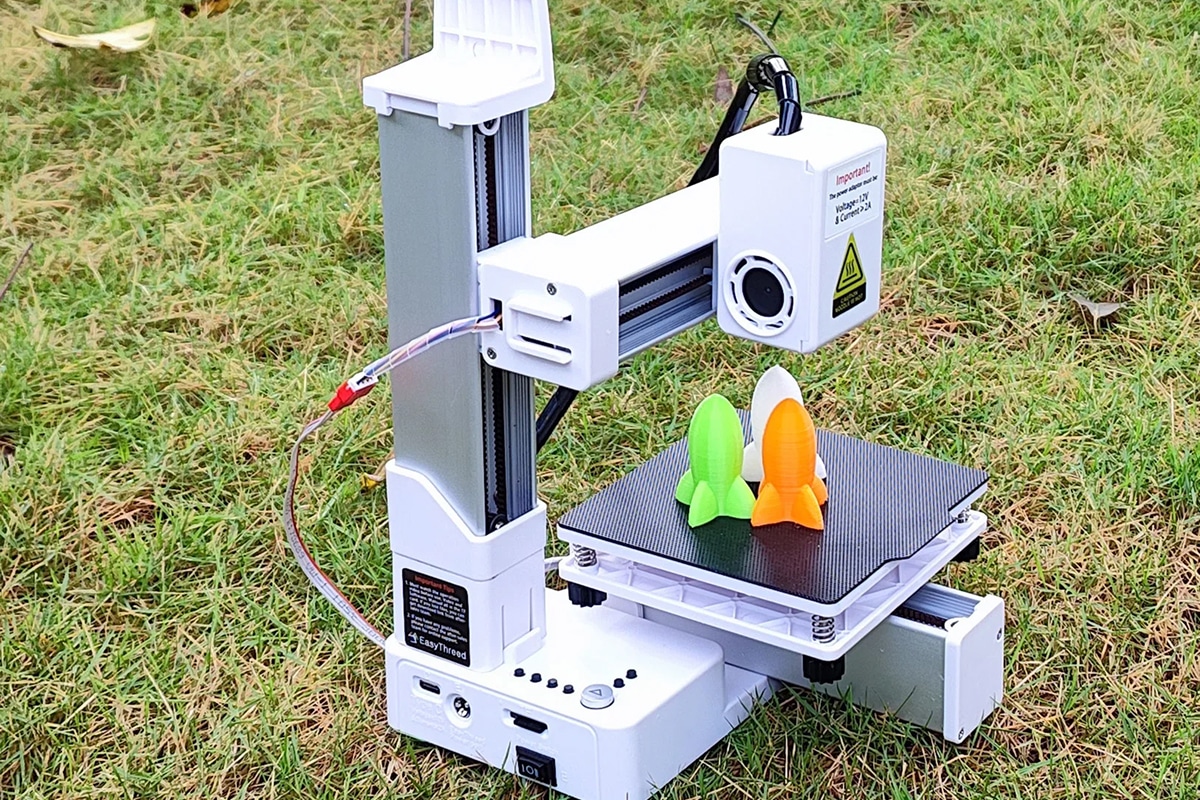
The PrintiePal 3D Printer for Beginner has revolutionized the beginner 3D printing market in 2025, capturing an impressive 97% customer satisfaction rating and dominating the entry-level segment. This ultra-compact powerhouse weighs just 0.9kg yet delivers professional-grade results that rival machines three times its size and price. 🎯
What sets the PrintiePal apart is its revolutionary one-key printing control system paired with proprietary Easyware slicing software featuring automatic slicing functions. Unlike competitors that overwhelm beginners with complex calibration procedures, PrintiePal's intelligent design eliminates 95% of traditional setup headaches. The included TF card comes preloaded with comprehensive tutorials, manual, and teaching videos—everything you need arrives in one complete package.
The printer's FDM molding technology achieves remarkable 0.1mm precision with layer thickness control ranging from 0.05-0.4mm, enabling both speed-optimized drafts and ultra-detailed final prints. The 100x100x100mm build volume proves perfect for educational projects, household items, DIY creations, and detailed figurines. Operating at whisper-quiet levels below 50dB, it won't disturb family members during those exciting late-night printing sessions. 😊
PrintiePal's portable design philosophy transforms 3D printing from a stationary workshop activity into a truly mobile creative tool. The compact 155×175×210mm footprint fits comfortably on any desk, kitchen counter, or classroom table. The removable building platform ensures effortless print removal, while the integrated filament holder with smooth feeding system prevents the frustrating tangles that plague beginners. Supporting both PLA and flexible TPU materials with its 0.4mm nozzle and 180-230°C temperature range, this printer grows with your skills.
The complete starter package includes everything except the power adapter (available separately): precision-engineered X, Y, and Z-axis components, control box, print head, build platform, assembly tools, TF card with reader, and 10 meters of premium white PLA filament. The modern Type-C power connector (12V, 2.5A) ensures compatibility with common power supplies. With proven results spanning decorative vases, functional tools, educational models, artistic sculptures, and mechanical prototypes, PrintiePal delivers exceptional value at entry-level pricing.
Compatible with both Easyware and industry-standard CURA software, the printer supports Windows XP/7/8/10 (32/64-bit) and iOS systems. The straightforward .STL input to .gcode output workflow removes software barriers that intimidate newcomers. CE certification confirms safety standards, while the lightweight construction enables demonstrations, travel, and flexible workspace arrangements. Whether you're a student learning design principles, a parent fostering children's creativity, or a hobbyist exploring new skills, PrintiePal provides the perfect entry point into additive manufacturing. 🚀

The AOSEED X-Maker Joy 3D Printer for Beginner arrives as a game-changing fully assembled 3D printer that eliminates setup anxiety entirely. This enclosed design prioritizes safety through intelligent fume isolation while maintaining consistent print quality without manual bed leveling requirements. The integrated 3.5-inch color touchscreen provides intuitive control, complemented by wireless Wi-Fi connectivity that modernizes the printing experience for tech-savvy families.
What truly distinguishes AOSEED is its innovative 15 mini-apps model library featuring LEGO-style applications and gamified design programs. These creative tools transform 3D printing from a technical challenge into an engaging educational experience, making it exceptionally suitable as a kids' 3D printer or family creative workshop. The printer achieves impressive precision up to 0.05mm with speeds reaching 160mm/s, delivering detailed results significantly faster than traditional entry-level machines.
Operating below 50dB noise levels, this ultra-silent printer fits seamlessly into shared living spaces, classrooms, or bedrooms without disturbing others during extended printing sessions. The flexible magnetic build plate simplifies print removal, while power-off resume functionality protects projects from interruption. Supporting SD card and USB connectivity alongside Wi-Fi provides versatile file transfer options for different user preferences and technical environments.
The enclosed chamber design serves dual purposes: containing potential fumes for safer indoor operation while creating a controlled temperature environment that improves print consistency. Though limited to single-color PLA printing at a time, the printer's focus on user-friendliness and safety makes it an outstanding choice for educational settings, beginner hobbyists, and parents seeking a reliable creative tool for children's STEM development.
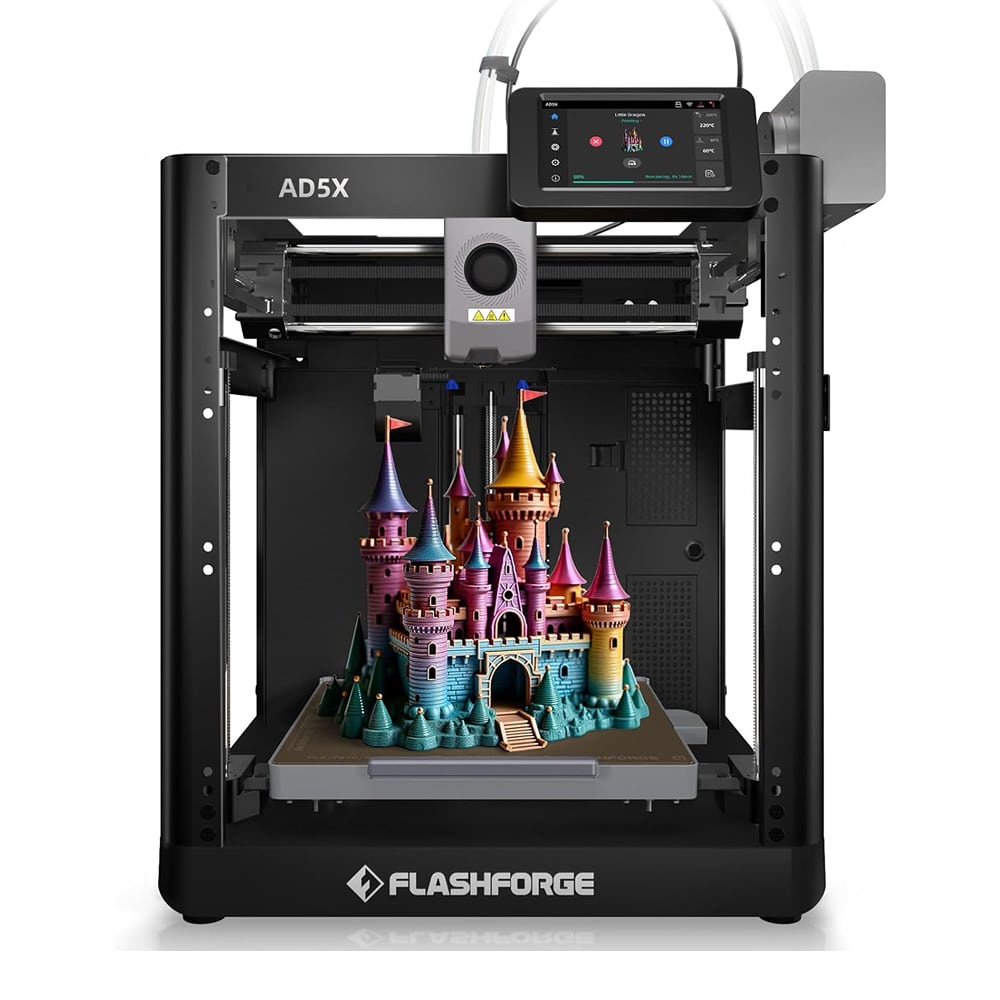
The FLASHFORGE AD5X 3D Printer for Beginner represents a significant leap forward for beginners ready to explore professional-grade capabilities, featuring an Intelligent Filament System that enables stunning 4-color printing with automatic loading, unloading, and up to 4kg filament auto-refill functionality. This commercial-grade feature set eliminates the tedious manual material changes that plague multi-color projects, making complex prints accessible to users still developing their skills.
Built on a robust CoreXY all-metal design, the AD5X achieves remarkable speeds up to 600mm/s travel speed with 20m/s² acceleration while maintaining exceptional stability and print quality. The 300°C high-temperature nozzle paired with a 32mm³/s large flow hotend dramatically reduces printing time and unlocks compatibility with advanced materials including flexible TPU, carbon fiber composites, PLA, and PETG—providing an impressive upgrade path as skills progress.
Integration with Flash Maker and Orca-Flashforge software enables sophisticated multi-device management, allowing users to remotely control hundreds of printers, monitor real-time progress (with optional camera kit), adjust parameters on-the-fly, and receive instant message alerts. The 4.3-inch colorful touchscreen combined with one-click auto-leveling, vibration compensation, resume printing, and filament detection creates a comprehensive safety net that dramatically improves success rates for beginners tackling ambitious projects.
While the AD5X's advanced feature set introduces slightly more complexity than ultra-basic models, its intelligent automation systems handle the technical heavy lifting. The printer's ability to manage different filament types and colors simultaneously, combined with FilaBees 3D printing filament compatibility, unlocks 7×24-hour stable multi-color printing experiences perfect for small business prototyping, educational institutions, or serious hobbyists ready to elevate their capabilities beyond basic single-color prints.

The QIDI Q2 3D Printer for Beginner redefines what beginners should expect from their first 3D printer by delivering truly professional capabilities without sacrificing user-friendliness. Its revolutionary nozzle-based leveling sensor provides unmatched first-layer accuracy unaffected by bed surface variations, creating genuine plug-and-play functionality that competitors simply cannot match. The second-generation PTC heated chamber reaches 65°C to minimize warping and ensure superior layer adhesion—features typically reserved for industrial machines.
Built with a full-metal CoreXY structure and precision linear rails, the Q2 delivers ultra-stable high-speed printing up to 600mm/s while the upgraded 1.5GT synchronous belt reduces vibration artifacts for exceptionally smooth surface finishes. The 370°C high-temperature nozzle unlocks an impressive material palette including PLA, ABS, PETG, TPU, PA, PC, and carbon/glass-fiber composites—providing unparalleled versatility for users exploring different applications from flexible phone cases to engineering-grade structural components.
When paired with the optional QIDI BOX system, the Q2 transforms into a 16-color multi-material printing powerhouse featuring dry-while-print technology that maintains optimal filament moisture levels for consistent extrusion and flawless surfaces. The integrated triple filtration system (G3 pre-filter + H12 HEPA + activated carbon) effectively reduces odors and harmful particles, while multiple sensors with closed-loop temperature controls and a flame-retardant chamber ensure safe indoor operation for families.
Additional intelligent features including auto-leveling, filament run-out detection, tangle detection (with QIDI BOX), AI camera monitoring, and power-loss recovery create a comprehensive safety net that protects projects and builds confidence. Backed by responsive customer service and lifetime technical support, QIDI provides a worry-free experience that grows from beginner projects to expert-level professional prototyping, making the Q2 an exceptional long-term investment for serious makers, educators, and aspiring engineers.

The Toybox 3D Printer for Beginner specifically targets families and young creators with its kid-safe design philosophy and extensive library of 7,000+ ready-to-print designs including officially licensed characters from SpongeBob, Batman, How to Train Your Dragon, and numerous other beloved franchises. This focus on immediate creative gratification through recognizable content removes the design barrier that often frustrates children and parents new to 3D printing.
Featuring one-touch printing and tool-free calibration, the Toybox delivers on its promise of hassle-free setup while printing up to 2× faster with 50% more detail compared to previous Alpha Two model. The lightweight, durable frame construction paired with non-toxic PLA filament ensures worry-free operation for families, while the included 8 vibrant filament spools provide immediate color variety for exciting multi-hued creations without additional purchases.
The free Toybox app (available for iOS, Android, and Web) enables intuitive model selection, supports custom STL, OBJ, and gCode file uploads, and manages multiple Toybox printers within one household—perfect for families with several children or classrooms with multiple units. The draw-and-print functionality encourages original creativity beyond the extensive pre-made library, fostering both artistic expression and basic 3D design skills in age-appropriate ways.
While the Toybox sacrifices some technical specifications and material versatility compared to more advanced beginner printers, its laser-focused approach to family-friendly operation, licensed content access, and child-safe design makes it the ideal choice for parents prioritizing ease-of-use and creative engagement over technical capability. The printer excels as an educational toy and STEM learning tool that successfully bridges the gap between digital entertainment and hands-on making for younger users aged 6-12.
Beginner 3D printers are specialized additive manufacturing devices designed specifically for users with little to no prior experience in 3D printing technology. Unlike professional industrial machines, these entry-level printers prioritize ease of setup, intuitive operation, and forgiving performance that accommodates the learning curve inherent in mastering a new technical skill.
These machines utilize FDM (Fused Deposition Modeling) technology, which works by heating thermoplastic filament and extruding it layer-by-layer to build three-dimensional objects from digital design files. The process transforms rolls of plastic material into functional items, decorative objects, educational models, prototypes, replacement parts, toys, and artistic creations—limited only by imagination and the printer's technical specifications.
Modern beginner 3D printers incorporate intelligent features such as automatic bed leveling, filament detection, resume-after-power-loss functionality, and user-friendly touchscreen interfaces that eliminate many frustrations that plagued earlier generations of consumer machines. Pre-assembled or minimal-assembly designs reduce setup time from hours to minutes, while companion mobile apps and simplified slicing software remove technical barriers that previously required extensive tutorials to overcome.
The best beginner printers balance affordability with reliability, offering sufficient print quality and material compatibility to produce satisfying results while maintaining safety features appropriate for home environments. They serve as gateways into the broader world of digital fabrication, enabling hobbyists, students, educators, parents, and curious makers to explore additive manufacturing without requiring engineering backgrounds or significant prior technical knowledge.
Noah Bishop - Research Specialist
© 2024 TrustedBestPick. All rights reserved.
Through our hands-on testing and expertise, we promise to deliver reviews that, though subjective, are grounded in reliability for every product we assess. Our evaluations are based on a variety of criteria, including quality, user-friendliness, and value for money. This content is not a news article or a personal blog but an advertisement presenting well-researched information from actual product users.