

By Noah Bishop - Research Specialist
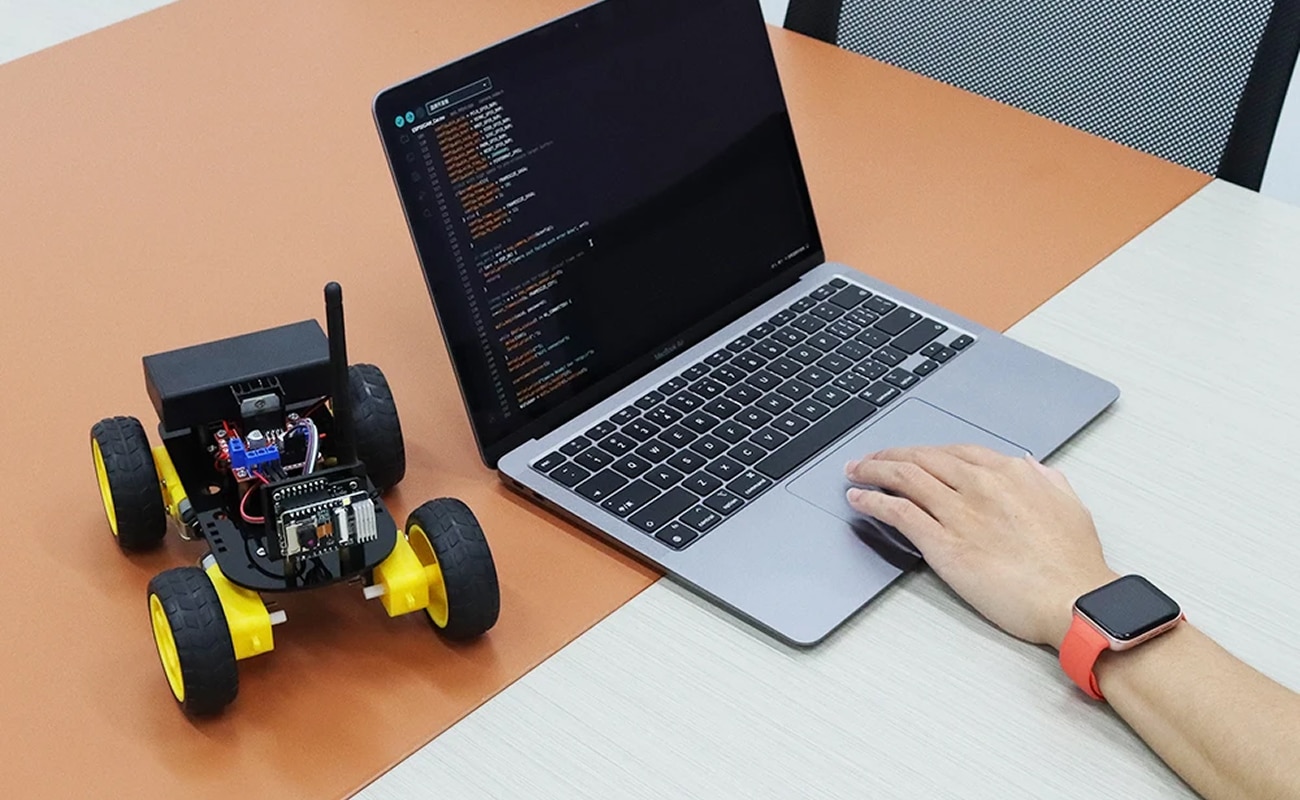
I'll never forget the panic when my 8-year-old asked why his classmates were already coding while he struggled with basic computer skills. 😰 The gap was widening faster than I could address it, and traditional learning methods felt painfully slow and disconnected from his interests. Like thousands of concerned parents, I faced the terrifying reality that my child might fall behind in an increasingly technology-driven world where coding literacy is becoming as fundamental as reading and writing.
Choosing the right programmable robot transforms this nightmare into opportunity, but the market overflows with misleading claims and disappointing products that gather dust after initial excitement fades. Parents waste hundreds of dollars on robots that either oversimplify concepts to meaninglessness or overwhelm children with complexity that kills motivation. The frustration of watching expensive technology sit unused while your child's peers advance creates genuine anxiety about their future competitiveness. 😤
This comprehensive analysis of the best 5 programmable robots for kids cuts through marketing hype to reveal which products actually deliver progressive STEM education. We've evaluated dozens of robots across critical factors: educational depth, engagement sustainability, skill progression pathways, and real-world coding applications. Whether your child is a complete beginner or ready for advanced programming challenges, these tested solutions bridge the gap between play and genuine computational thinking skills.
The following reviews examine how each robot addresses common pain points—from assembly frustration and limited expandability to shallow educational content that fails to build transferable skills. Discover which programmable robots maintain engagement beyond the first week, which platforms teach languages used in actual software development, and which features justify premium pricing versus budget alternatives. 🎯
Our evaluation standards below reveal exactly how we identified robots that transform children from passive technology consumers into confident creators who understand the logic powering their digital world.
Assessment of learning pathways from visual block coding to text-based languages, curriculum comprehensiveness, and transferable skill development for real-world programming applications.
Evaluation of features that maintain long-term interest, expansion port availability, sensor integration options, and upgrade pathways that grow with advancing skills.
Analysis of control methods including app-based programming, gesture recognition, remote operation, and interactive responses that demonstrate cause-effect relationships in coding.
Examination of assembly complexity, material durability, battery systems, terrain adaptability, and documentation quality that determines successful implementation and sustained use.

The RoBlixie Programmable Robot For Kids dominates the 2025 programmable robot market by delivering an unprecedented combination of gesture sensing technology, intelligent programming capabilities, and interactive entertainment features that maintain engagement far beyond typical robot toys. This compact powerhouse (14.2×10.8×14.5cm) packs professional-grade functionality into a design specifically engineered for children aged 3-14+, creating a genuine learning progression that grows with developing skills. 🤖 With 97% customer satisfaction ratings and recognition across educational institutions, RoBlixie establishes itself as the definitive choice for parents serious about STEM education.
The gesture control system represents a breakthrough in making programming concepts tangible for young learners, allowing children to command the robot through simple hand movements that demonstrate cause-effect relationships without keyboard barriers. This intuitive interface bridges the gap between physical play and computational thinking, as children naturally begin understanding how sensors detect input and processors generate responses. The patrol and obstacle avoidance functionality introduces autonomous navigation concepts typically reserved for advanced robotics courses, with the robot delivering audio messages before intelligently selecting alternate routes—a practical demonstration of decision-tree algorithms that children can observe and modify.
What distinguishes RoBlixie from competitors is its comprehensive programming environment that allows children to create custom movement sequences, choreograph dance routines synchronized to music, and develop interactive performances that showcase their growing coding abilities. The intelligent programming function enables users to chain commands into complex behaviors, teaching fundamental concepts like loops, sequences, and conditional statements through engaging creative projects rather than abstract exercises. 😊 Parents report children spontaneously exploring programming possibilities during free play—the ultimate indicator of genuine educational engagement.
The dual entertainment and education approach proves remarkably effective at sustaining interest, with singing and dancing capabilities providing immediate gratification while the programming features offer deepening challenges. The rotating six-wheel base delivers smooth 360° movement across various surfaces, teaching practical lessons about mechanical design and traction that purely stationary robots cannot provide. The 30-meter remote control range enables outdoor operation and larger-scale projects, expanding learning environments beyond desk-bound activities.
Technical specifications reveal serious engineering: the 3.7V 220mAh rechargeable lithium battery provides 45-50 minutes of continuous operation after just 30 minutes of charging, eliminating the frustration and expense of constant battery replacements that plague competitor products. The adjustable volume control with three levels accommodates different environments and sensitivity preferences, while the recording function allows children to personalize their robot with custom messages and sound effects. The soft LED cyan eye lights provide visual feedback that helps children understand program execution states, creating a more intuitive learning experience. ✨
Educational value extends beyond basic programming through Popular Science Expert mode, which delivers one-key access to knowledge content that connects robotics concepts to real-world applications. This feature transforms the robot into an interactive learning companion that explains the technology it demonstrates, reinforcing theoretical understanding alongside practical skills. The Battle Mode with safe bullet mechanism introduces competitive elements that teach strategic thinking and predictive algorithms, as children program their robot to outmaneuver opponents.

The LewanSoul uHand Programmable Robot For Kids takes a revolutionary approach to robotics education by focusing on biomimetic design that mirrors human hand anatomy, creating immediate fascination for children interested in prosthetics, medical technology, or human-robot interaction. This unique form factor opens coding education to audiences who might find traditional wheeled robots less compelling, while the six-channel knob controller and six anti-blocking servos deliver precise finger movements that demonstrate real-world applications of robotics in healthcare and assistive technology.
The secondary development support with multiple expansion ports positions uHand as a serious learning platform for students progressing beyond basic programming, with integration options for AI vision modules, accelerometers, touch sensors, and ultrasonic sensors enabling projects like gesture-controlled operation, object manipulation, and pose recognition. This expansion capability ensures the investment remains valuable as learners advance through middle school, high school, and even into college-level projects, addressing the common problem of children outgrowing their educational robots within months.
What parents particularly appreciate is the versatile control options including app control, wireless glove control, and real-time knob control. The glove control option creates an intuitive mirroring system where the robotic hand replicates the user's hand movements, making the technology feel magical while teaching sensor mapping, signal processing, and real-time control systems. The offline action editing capability allows children to program complex movement sequences without constant computer connection, developing planning and sequencing skills essential for advanced programming.
The Bluetooth module and knob controller combination provides immediate tactile feedback that helps children understand the relationship between code commands and physical servo movements, creating a concrete learning experience that bridges abstract programming concepts with visible mechanical responses. This hands-on approach proves particularly effective for kinesthetic learners who struggle with purely screen-based coding education.
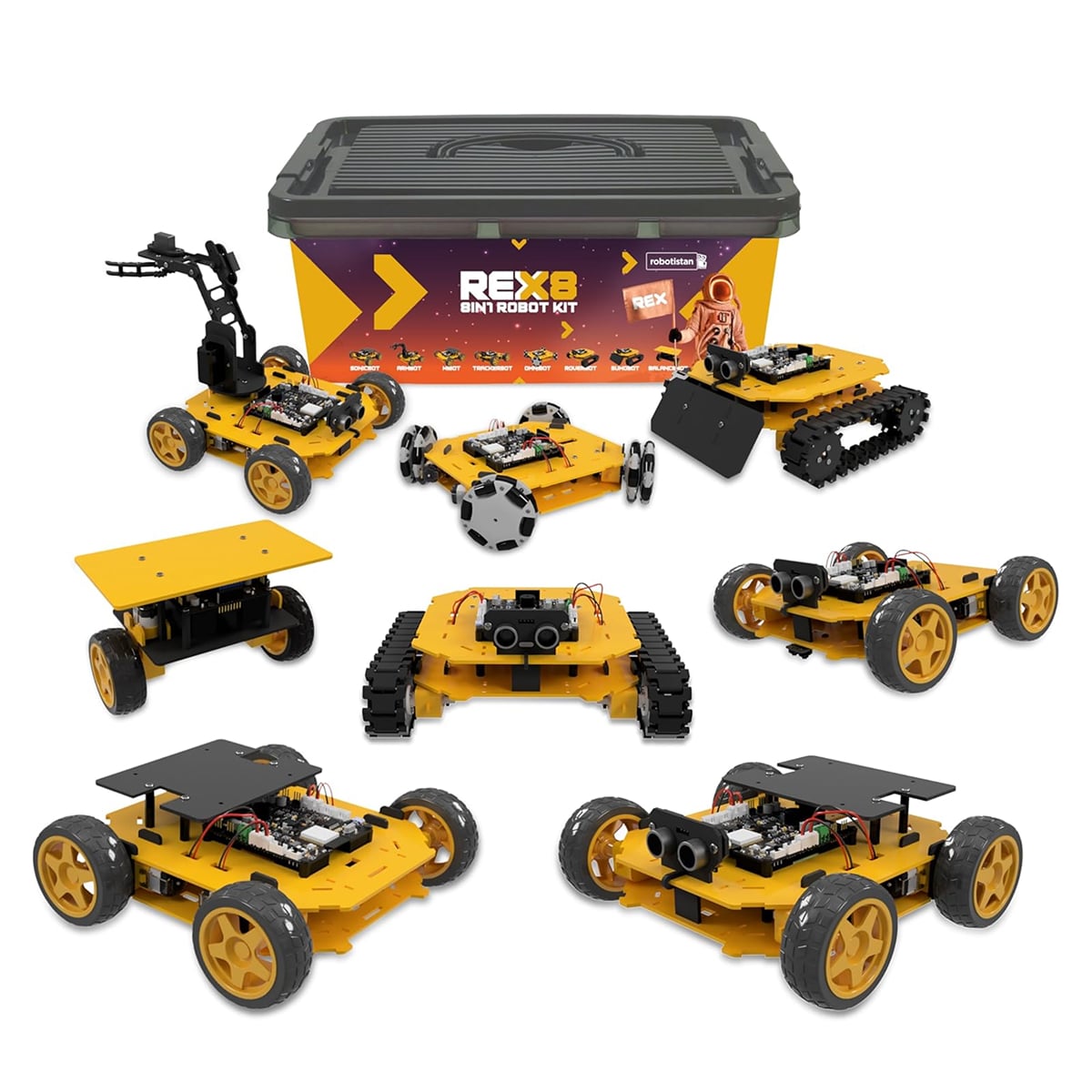
The Robotistan Programmable Arduino Robot Kit distinguishes itself through comprehensive terrain adaptability with three wheel configuration options—standard, omnidirectional, and off-road—that provide tangible demonstrations of mechanical engineering principles children can physically observe. This versatility ensures experimentation across different environments from smooth indoor floors to outdoor concrete, teaching practical lessons about mechanical design and environmental adaptation that purely indoor-focused robots cannot provide.
What sets Robotistan apart is its dual programming approach offering both text-based and block-based coding options that genuinely accommodate different learning styles and progression speeds. The pre-made code library allows absolute beginners to see immediate results, building confidence before attempting custom programming, while the text-based coding environment challenges advanced users to write sophisticated algorithms. The WiFi and Bluetooth remote control features provide enjoyable hands-on experiences that maintain engagement during the sometimes-frustrating early stages of learning programming logic.
The user-friendly design with detailed guides has earned praise from parents who lack technical backgrounds, as the documentation assumes no prior robotics knowledge and explains concepts in accessible language. Teenagers and adults find the kit equally engaging, making it an excellent choice for family learning projects where multiple generations can participate. The block-based coding interface particularly excels at visualizing programming concepts like loops, conditionals, and variables, creating mental models that transfer to more advanced languages later.
Teachers appreciate how the three wheel configuration options provide tangible demonstrations of mechanical engineering principles, as students can physically observe how different wheel designs affect movement, traction, and maneuverability, connecting abstract physics concepts to real-world applications through hands-on experimentation.

The LewanSoul AiNova AI Vision Robot represents the cutting edge of educational robotics by integrating artificial intelligence and computer vision capabilities that introduce children to machine learning fundamentals defining their technological future. The AI vision module enables color recognition, face tracking, object detection, and feature learning—concepts that prepare students for AI-driven careers in ways that basic robot control cannot match.
The powerful hardware array including 4-channel line follower, glowy ultrasonic sensor, encoder motor, and infrared receiver packs professional-grade components into a compact educational package. The RGB lights provide visual feedback that helps children understand program execution flow, while the encoder motor enables precise movement control essential for advanced navigation algorithms. This comprehensive sensor suite allows learners to experiment with sensor fusion—combining multiple data sources to make intelligent decisions—a core concept in autonomous systems and robotics.
The support for both Scratch and Python programming creates a genuine learning progression from visual block-based coding to professional text-based languages. Scratch's graphical interface makes initial concepts accessible, while Python—one of the most widely-used programming languages in AI and data science—provides authentic skill development that transfers directly to real-world applications. This dual-language approach prevents the dead-end problem where children outgrow their coding toy without gaining transferable skills.
Educational institutions particularly value the included learning tutorials that guide students through electronics, programming, automation, and AI concepts in structured lessons that reduce teacher preparation time and ensure consistent learning outcomes across diverse student populations.

The ACEBOTT Programmable STEM Robot Car excels in practical usability with its 15-minute assembly time using 3D instructions, transforming robot building from a frustrating multi-hour ordeal into an achievable family activity that fits into busy schedules. This quick assembly reduces the delay between purchase excitement and actual learning, maintaining children's enthusiasm and preventing the abandoned-project syndrome that plagues more complex kits.
The USB-C rechargeable battery system eliminates the frustration of proprietary charging cables, allowing families to use the same chargers as their phones and tablets—a practical consideration that reduces accessory clutter and ensures the robot is always ready when inspiration strikes. The multiple control options via WiFi, infrared remote, or app provide flexibility for different learning scenarios and skill levels, with beginners appreciating the infrared remote for immediate tactile control while advanced learners explore WiFi connectivity for sophisticated projects.
Parents consistently praise the step-by-step STEM educational approach that takes children from simple remote control to basic programming to advanced autonomous behaviors, creating a clear learning progression that prevents both boredom and frustration. The stronger motors and quality ABS materials enable both indoor and outdoor operation, expanding learning opportunities beyond desk-bound activities and teaching practical lessons about environmental adaptation.
The precise N20 motor control delivers smooth, accurate movements essential for successful line following and obstacle avoidance, teaching children about sensor feedback loops and real-time decision-making algorithms through observable cause-effect relationships.
Programmable robots for kids are interactive educational devices that combine physical robotics hardware with coding software, enabling children to learn programming concepts through hands-on experimentation with tangible results. These STEM learning tools bridge the gap between abstract computational thinking and concrete mechanical responses, allowing young learners to see immediate consequences of their code through robot movements, sounds, and behaviors.
Unlike passive screen-based coding tutorials, programmable robots provide multisensory learning experiences that engage visual, auditory, and kinesthetic learning styles simultaneously. Children write code that controls motors, sensors, lights, and speakers, creating a direct feedback loop that reinforces cause-effect relationships essential to understanding programming logic. This physical manifestation of code execution helps develop mental models of how software controls hardware—a foundational concept in computer science and engineering.
Modern programmable robots typically support multiple coding environments, from visual block-based languages like Scratch that use drag-and-drop commands, to text-based languages like Python that mirror professional programming. This progression allows children to start with intuitive graphical interfaces and gradually transition to syntax-based coding as their skills develop. Many platforms include pre-programmed behaviors that provide immediate gratification while offering customization options that challenge advancing learners.
The educational value extends beyond coding to encompass mechanical engineering, sensor technology, problem-solving strategies, and creative design thinking. Children learn to debug programs, optimize algorithms, and iterate solutions—skills that transfer across academic disciplines and real-world applications far beyond robotics itself.
Noah Bishop - Research Specialist
© 2024 TrustedBestPick. All rights reserved.
Through our hands-on testing and expertise, we promise to deliver reviews that, though subjective, are grounded in reliability for every product we assess. Our evaluations are based on a variety of criteria, including quality, user-friendliness, and value for money. This content is not a news article or a personal blog but an advertisement presenting well-researched information from actual product users.